My favorite unconventional animal: Roseate spoonbill
This post was written for this month's Bearblog / Grizzly Gazette Carnival. Thanks to Sage for hosting this event!
The roseate spoonbill is among the six spoonbill species that can be found around the world. Also known as Platalea ajaja, this freshwater bird is the only native spoonbill species in the Western Hemisphere. It can be seen year-round in the Caribbean, South America, and parts of the United States (like the coasts of southeast Texas and the tip of Florida).
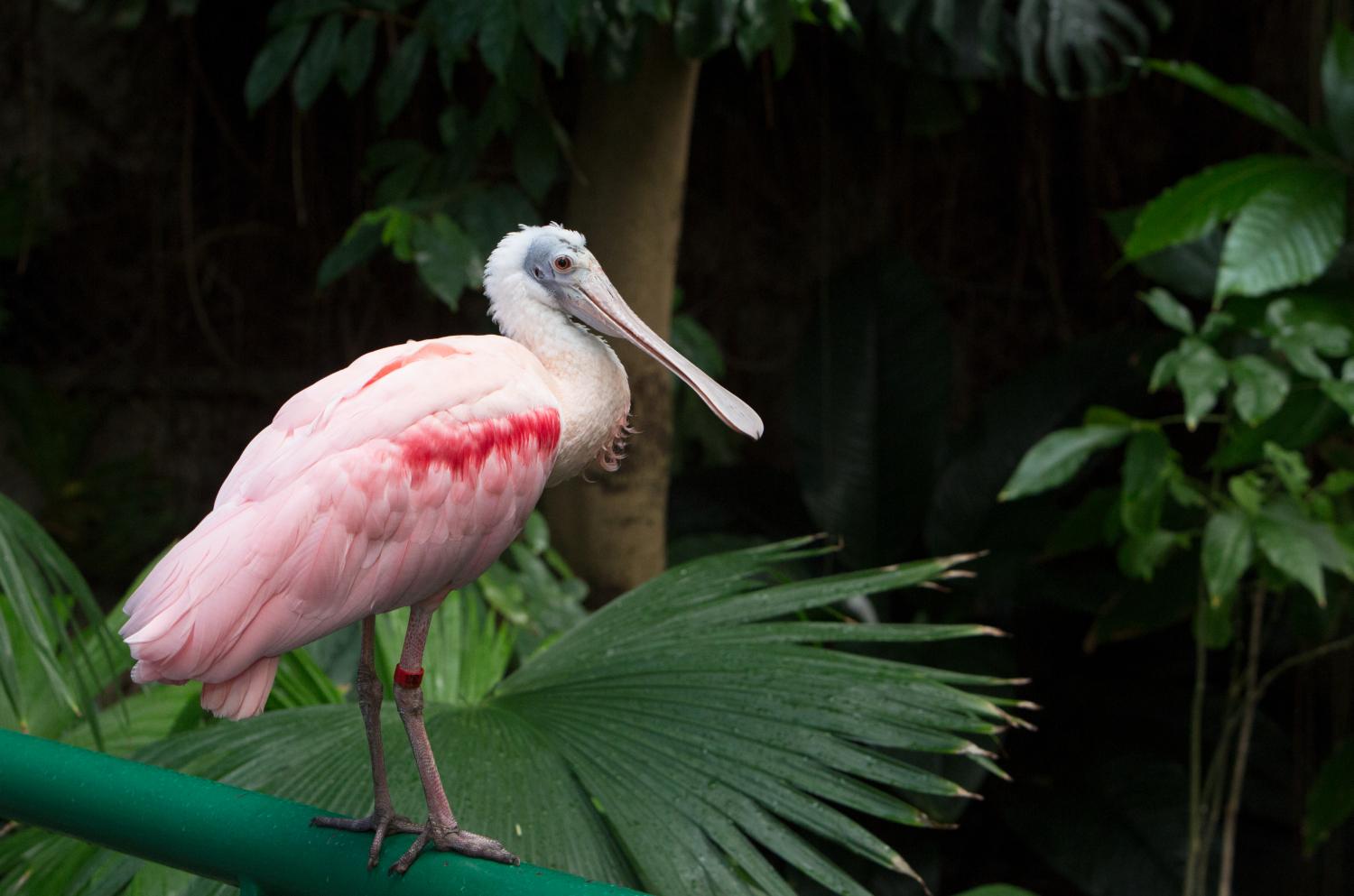
A photo of a roseate spoonbill standing on a green pole. The bird is in front of a leafy background. (Taken by Chris Wellner at the Smithsonian's National Zoo.)
I discovered this uncommon and unusual bird through the 1995 international edition of Grolier Encyclopedia of Knowledge. Although I found its article too brief, I would often focus on its realistic artwork instead. When I was young, I would pick up the said encyclopedia just to be mesmerized at this rather obscure bird. I like how this silly-looking bird lowers its head while standing on a pale-colored branch. The caption under the nature illustration provides a good summary about its behavior, diet, and distribution:
The roseate spoonbill, a long-legged water bird, uses its broad bill to catch fish and shrimp in shallow waters. Once nearly exterminated by those hunting it for its fancy plumage, it is now protected by U.S. law, and its numbers have increased.
Thankfully, this bird is saved from its near-extinction that happened in the past. What is the point of hunting this intriguing creature just for its feathers?
Anyway, the bird's feathers are white and pink, with the latter coming from its seafood-heavy diet. They complement well with its gray, spoon-shaped beak (which is what I love for a spoonbill).
Although I never saw the roseate spoonbill in real life, I can read about this unusual bird at the Encyclopedia of Life and Florida Fish and Wildlife Conservation Commission. I can even make a doodle inspired by this species (like I did in 2021).
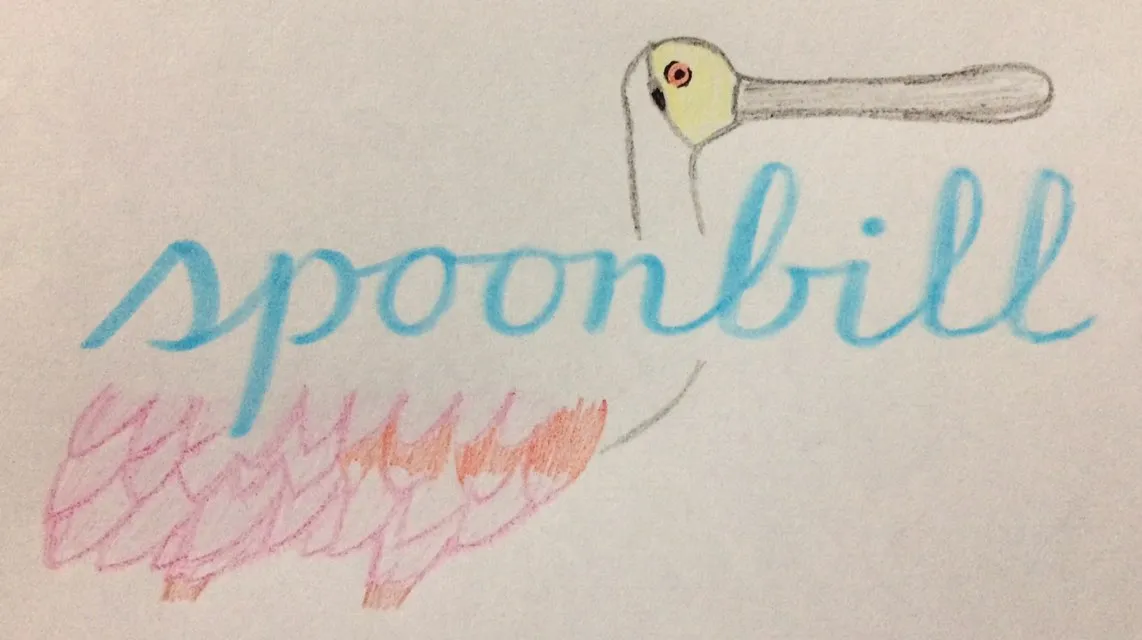
A traditional, colored pencil drawing of a roseate spoonbill. It has the word "spoonbill" written in the modern calligraphy style (using a sky blue, brush-tip highlighter).